Why I Love Character Actors Like George Wendt
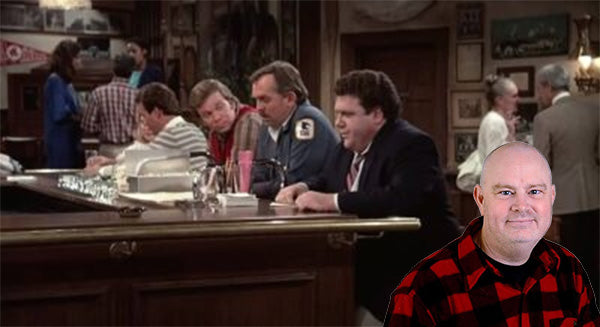
By Dan Brown “Norm!” If that one word brings to your mind the image of a rumpled figure plopping down on his favourite bar stool to wearily take the first sip from a mug of draft, then George Wendt can go to his reward knowing he did a good job. If you watched television in the 1980s and 1990s, you will know Wendt as the performer who brought everyone’s favourite wise-cracking barfly to life on Cheers, the sitcom featuring a group of lovable losers in a Boston bar. Wendt, who died May 20 at the age of 76, was Emmy-nominated six times for playing the role of Norm Peterson, which earned him a spot in the pop-culture canon. His example also demonstrates how the right character actor can make an entire series come alive. Wendt so expertly inhabited Peterson that it’s impossible to imagine any other player in the same part. That’s why I love character actors. They are so talented, they can make something special out of a nothing role. I’m talking about your George Wendts, your Stanley Tuccis, your Stephen Roots, your Judy Greers. These B-listers are geniuses for doing the improbable: They make a living as actors without ever getting typecast. Give me a skilled character actor over a leading man or lady any day. I find them much more interesting than any Tom Cruise, Brad Pitt, or Sandra Bullock. The best character actors exemplify Morgan Freeman’s maxim that “Steady work is better than stardom.” The thing about a guy like Cruise is, I can’t relate to him. His enduring good looks, flawless body, and smooth patter give me pause because I don’t know anybody who has stayed as perfectly preserved as he has over the decades. In the final analysis, such perfection on the big or small screen is just boring. After Cheers went off the air in 1993, Wendt had a second act on Broadway in productions of Elf, Hairspray and Breakfast at Tiffany’s, plus he continued to be a perpetual guest-star on shows as different as The Larry Sanders Show, Fresh Off The Boat, and Spin City. A Second City alum, Wendt became an unofficial cast member on Saturday Night Live for a number of episodes. Talk about versatility! It certainly didn’t hurt Wendt when the Cheers producers would assign him a juicy zinger for the cold open of many an episode. The harried Peterson’s desire, or perhaps need, to grab a beer as soon as he walked through the door helped cement his Everyman appeal. Male viewers may have wanted to be Ted Danson’s Sam Malone, but in their hearts they knew they were really more like Norm. Whatever you want to call George Wendt, he wasn’t a “star.”. He was a working actor who played his part so lovingly he wormed his way into the collective memory. He proved the truism that there are no small roles, just small actors. So raise a glass to George Wendt and the other character actors we love. They may not win the biggest awards, but they steal scenes left and right. Dan Brown has covered pop culture for more than 32 years as a journalist and also moderates L.A. Mood’s monthly graphic-novel group.
Boyd’s New Graphic Memoir is so Groovy
By Dan Brown. If you’re a child of the 1970s, you’re going to love D. Boyd’s Denniveniquity. This new graphic memoir covers the years 1977 to 1980 in the comic creator’s life growing up in Saint John. Boyd, now a Montrealer, captures the Me Decade better than any other artist, on par with filmmaker Richard Linklater – the guy who directed Dazed and Confused. The book begins when button-nosed Dawn is in Grade 7. She has a crush on movie star Gene Wilder and has seen Star Wars three times. Her favourite band is Trooper. Boys like to grab her developing breasts – “WONKA WONKA!!” one yells as he assaults her in the school hallway. Her mother is relentlessly negative. “You’re too young to look so matronly,” she chides. “Boys are only going to want one thing from you.” The book follows Dawn as she navigates each new grade. There are moments of glee, as when classmate Robbie Allen calls her on the phone at home. And moments of frustration: “Isn’t there anything I’m good at?” she wonders after failing to master downhill skiing. Denniveniquity rewards close reading. Each panel is carefully crafted to reinforce the feel of the era in which Dawn grows up. If, like me, the first full decade you lived through was the 1970s, this book is going to be a thrill. Boyd packs each panel with detail. There’s an April Wine T-shirt. A scene at a Trooper concert (there’s also a discussion of the proper way to pronounce lead singer Ra McGuire’s first name). Keen-eyed readers will also spot a reference to Meco’s galactic funk on the back of a newspaper page. Farrah Fawcett-Majors gets a mention, as do TV shows like Soap and Grizzly Adams, and the Hamilton band Teenage Head. It was the decade of faux wood panelling on station wagons, Participaction, KMart, Joe Clark, Jimmy Carter, the Amityville Horror, and Fotonovels. In one explosive splash panel, as the New Year’s countdown approaches and 1980 beckons, Dawn sees the pop culture of her childhood flash before her eyes. “Wow, the ’70s are over,” she marvels. “That was most of my childhood.” And, of course, Dawn gets drunk for the first time by invading her parents’ liquor cabinet in the basement bar. Nor can her young mind understand the unwritten rules of friendship and dating. “Whatever I like about him seems to be the same thing I hate about him,” she says of her on-again, off-again boyfriend Nick. But more than getting the specifics of the 1970s in Canada right, Denniveniquity nails the sensation of how time passes for a young person. Boyd pulls this off by omitting clunky transitions, just as the developing brain does. She glides effortlessly from one scene to the next, and the reader never feels something is missing. It all makes sense. The only other comic creator who was able to do the same as masterfully is Gilbert Hernandez with his childhood recollections in Marble Season. Denniveniquity covers some of the same ground as Boyd’s 2019 book Chicken Rising, but don’t let that deter you. It is also published by the East Coast’s Conundrum Press. I give it my highest recommendation. This book belongs in the same conversation as Jillian and Mariko Tamaki’s This One Summer, Michel Rabagliati’s Paul Moves Out, and Seth’s ongoing Nothing Lasts in Palookaville. With Jeff Lemire’s new autobiography looming in July, this is shaping up to be a landmark year for graphic memoirs by Canadian comic creators! Dan Brown has covered pop culture for more than 32 years as a journalist and also moderates L.A. Mood’s monthly graphic-novel group.
I Hate To Say It, But Movie Dinosaurs Are Not Real
By Dan Brown Dinosaur movies are a thing of the past – and the future. Specifically the near future. This July will see the release of Jurassic World Rebirth, the latest chapter in the long-running series about the prehistoric creatures running amok in our time. This year will also see the debut of Primitive War, which is set in 1968 and fuses the dino flick with the Vietnam War genre (no release date has been set as of this writing). Then, down the road a little bit, Flowervale Street is among the Mesozoic Era offerings coming to the silver screen next year. There have been so many dinosaur pictures, you could trace the history of Hollywood using them, from the age of stop-motion animation to today’s CGI. They’ve gone from clumsy clay creatures to sophisticated computer creations. And that’s the problem. However much time and money the FX wizards in Tinseltown spend to convince us these monsters look like the genuine article, please refrain from calling them “real” or “lifelike.” We can do without any online comments this summer along the lines of, “The T-Rex in Jurassic World Rebirth is so realistic” or “I can’t believe how real that brontosaurus looked!” Because how would we know? There is no one alive on the planet today who has seen a velociraptor or stegosaurus in the wild. There are no photos of dinosaurs. There is no video. No primary-source records exist of how actual dinosaurs actually appeared. There are no dinosaurs in zoo settings for us to observe. They lived in the distant past, and while we have unearthed fossil proof of their existence, none of them left any Polaroids which humans can use to judge the “realism” factor of these movies. Unlike, say, the cowboys who populate the Western genre of movie – film fans can say with some confidence if a motion picture such as Tombstone or Wyatt Earp comes close to the mark. Photos of cowboys from the 1800s do exist. Now, to be fair, the people who say things like, “Steven Spielberg has created some authentic-looking dinosaurs” might not mean it literally. They might mean something else, such as “The dinosaurs in this movie accord with what experts currently theorize about the appearance of dinosaurs.” (And the emotions the screen lizards evoke – like fear and excitement – are certainly real.) But here’s the thing: Dinosaur experts who have predicted what these creatures looked like (and what the planet’s surface looked like back then) don’t always agree, nor do their opinions stay static. The thinking changes, and our shared concept of how dinosaurs appeared also changes. I am not a paleontologist, but I do recall there was a moment in the history of studying dinosaurs when the conventional wisdom changed – dinosaurs had more feathers, the media-consuming public was told some years ago. So the dinosaurs on screen changed with that shift in thinking. Guys like Spielberg want to get it right, they want to be up on the current theories. But experts can be wrong. I’m not trying to be conspiracy-minded. However, if the plot of Jurassic Park ever does come to pass in the real world, and humankind somehow manages to resurrect dinosaurs, it’s a safe bet we will discover that the conventional thinking is wrong in some important ways. For all we know, the fire-breathing Godzilla may be the most accurate depiction of a dinosaur that the movie industry has ever come up with. In which case, they better evacuate Tokyo as soon as possible! Dan Brown has covered pop culture for more than 32 years as a journalist and also moderates L.A. Mood’s monthly graphic-novel group.
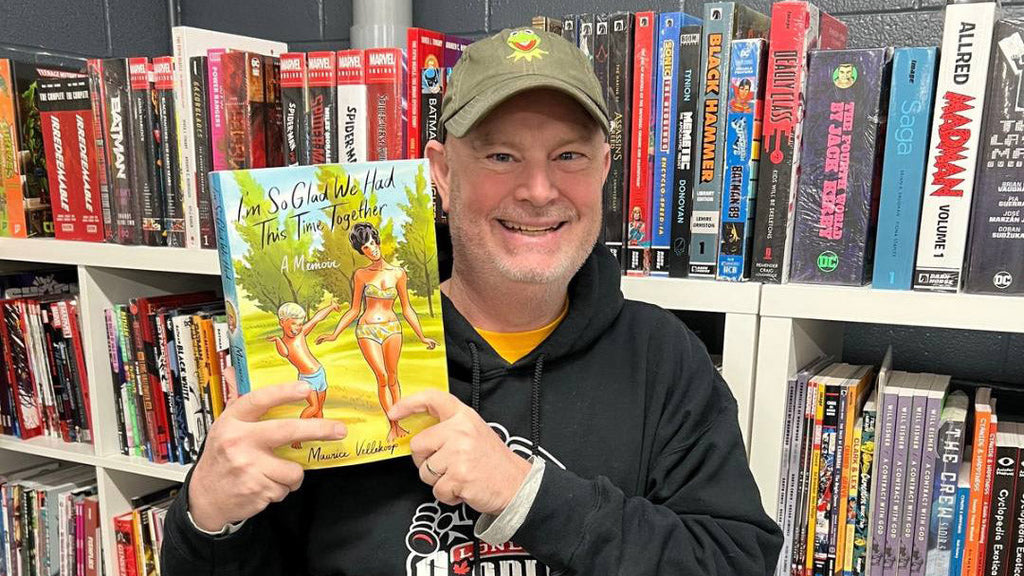
GNG Meets to Talk About Toronto Coming-of-age Memoir
By Dan Brown SPOILER WARNING: This column contains plot details from Maurice Vellekoop’s I’m So Glad We Had This Time Together, so if you value surprise, stop reading now! Here’s the rundown on the most recent meeting of the L.A. Mood Graphic-Novel Group, which took place Saturday, May 10. The book: I’m So Glad We Had This Time Together by Toronto graphic artist Maurice Vellekoop. The discussion: The book we all read falls squarely into the Canadian school of graphic memoirs – for some reason, homegrown creators are really good at telling their own origin stories. In fact, they are the best in the world. In this particular case, Vellekoop puts the focus on his own upbringing as the son of religious Dutch immigrants who settled in Toronto. L.A. Mood Comics & Games co-owner Carol Vandenberg pitched the book in January for our 2025 reading list as she, too, is the child of a Dutch immigrant family. Carol said she recognized a bit of her experience in the book’s details, like Vellekoop’s mother making clothes for her children and his childhood home being decorated with Rembrandt and Vermeer paintings. It was the Walt Disney movie Fantasia that sparked Vellekoop’s imagination as a child. He attended a screening with his father, who is a central figure in the artist’s story. One moment his dad is spanking him, the next spoiling him. Talk about mixed messages! During our opening lightning round – everyone around the table gets two minutes to share their initial thoughts – almost every group member said they enjoyed or appreciated the book. We did talk about the graphic nature of the story – there are a number of sex scenes as Vellekoop embarks on his voyage of self-discovery. We briefly discussed how much of a creator’s personal life the reader ought to see, with some members noting how Vellekoop wanted to be transparent about his identity. One central paradox runs through the whole story: According to their religious beliefs, his parents indicate it’s fine for Vellekoop to be gay, but he can’t get into heaven if he ever acts on his sexuality. Naturally, this contradiction messes him up. Later in life, Vellekoop goes into therapy. After a number of tries, he finds a therapist who helps him make sense of his feelings about his mother and father. Vellekoop is more than up to the challenge of making the process of therapy – therapist and client sitting and talking – visually interesting for the reader. In the hands of a lesser artist, those sections of the book might not have been as compelling. One of the devices he uses is what I would call “the devil and angel on his shoulders.” Vellekoop gives the two conflicting voices in his head a physical form as clouds of emotion, and finally – at the moment of his biggest breakthrough in therapy – they dive back into his head. Another element group members mentioned liking is the memoir’s depiction of Toronto over the years. In one party scene in the 1980s, for instance, I spotted one of my former Ryerson journalism profs – Vellekoop did not skimp on any details. He got the look and feel of different eras in Toronto history right. Further reading: Check out Seth’s It’s A Good Life If You Don’t Weaken, Michel Rabagliati’s Paul Moves Out, and Jeff Lemire’s next book, which will be released on July 15, is called 10,000 Ink Stains: A Memoir. L.A. Mood’s Graphic-Novel Group meets the second Saturday of every month. Next month’s selection is Dean Motter’s Mister X: The Modern Age. We are on a roll with Canadian books in recent months! We’ll reconvene June 14 at the gaming tables in the store at 11 a.m. All are welcome to join the discussion! Dan Brown has covered pop culture for more than 32 years as a journalist and also moderates L.A. Mood’s monthly graphic-novel group.
No One Feels Guilty About Their Guilty Pleasures
By Dan Brown What are your guilty pleasures? Reality TV? Soap operas? Disco music? The Three Stooges? Something else? My guilty pleasures include old Marvel comic books, black-and-white sci-fi magazines, and yacht rock. But here’s the thing: If you’re like me, you probably don’t feel all that guilty while enjoying your guilty pleasures. In fact, almost no one does. It’s time to admit that the term “guilty pleasure” has outlived its usefulness. It’s been a long time since any of us felt shame for liking so-called “lowbrow” culture, and there are a number of reasons for the shift. The original idea behind putting those two words together was that some movies, songs, TV shows, et cetera were so cruddy they were beneath supposedly cultured people. It was a way to separate the things that were Art from the stuff that was crap. This meant going to the opera was better for you than, say, watching Road Runner cartoons. If you appreciated highbrow things, you were a better person and if you liked pop culture, your tastes were considered stunted. (The question this line of thinking prompts is, why are all the things that are supposed to be good for me so hard to consume? In this view, culture is medicinal – it tastes awful, but you’ll be better for experiencing it.) Somewhere along the line, our collective thinking changed. Thank goodness. As pop culture has moved to the centre of our culture (our “discourse,” if you want to use a fancy academic word), it has become more respectable, more like Art. When I was a kid delivering the London Free Press in the 1970s, they didn’t report weekend movie grosses every Monday. Fast-forward to today and Hollywood is a big, legitimate business. No one disputes motion pictures have a role to play in telling our collective story. Even horror pictures! Or look at what’s happened with TV. Once derided as the boob tube (because TV shows were made for viewers of low intelligence), network TV underwent a renaissance in the 1990s that has given way to the streaming revolution we are now experiencing. We are in a TV Golden Age. Much more money and effort is invested into making entertainment in the 2020s than 50 years ago. And we also have the internet, a global communications hub that allows us to talk with other fans around the world, and guess what? They agree there’s a lot more going on in populist culture than the snobs ever gave it credit for. Superman is a metaphor for the immigrant experience? Not just a dumb comic about a hero who punches bad guys? What the? The theory of the long tail means those who love Dungeons & Dragons, for instance, in one community don’t feel so alone anymore – there are RPG enthusiasts everywhere, and if that many people love gaming, can they all be wrong? The middle phase in this shift was when people would say they appreciated something “ironically,” which was another way to wink, to indicate you were too smart to be enjoying something, but you were self-aware enough to know it wasn’t really that mentally nutritious. Well, in 2025 no one says that much anymore, either. For better or worse, we no longer live in a shame-based society. So if you catch yourself copping to your own “guilty pleasures,” don’t feel you need to use those words. Consider this column permission to like whatever culture you prefer – and not feel ashamed or embarrassed while enjoying it. Dan Brown has covered pop culture for more than 32 years as a journalist and also moderates L.A. Mood’s monthly graphic-novel group.
Take a ride on the new Heavy Metal
By Dan Brown Heavy Metal is back. Like an undead corpse that refuses to stop lurching forward, the once-groundbreaking comic magazine has returned to newstands with a No.1 issue that relies heavily on nostalgia for the 1981 movie that carries the same name. If you’re a fan of the woman warrior Taarna, or sports cars entering the Earth’s atmosphere, or all-powerful evil green orbs, you’ll want to check it out. If not, you can safely give it a miss. I was never a regular reader of the mag, which – like Britain’s 2000 A.D. – was inspired by the French periodical Metal Hurlant and first appeared in 1977. But I think the team behind the debut edition is counting on readers already having warm feelings about Heavy Metal, the magazine and the movie. Editor-in-Chief Frank Forte says the new No. 1 represents a relaunch, not a reset, and calls the glossy, 232-page introductory issue “an unholy mix of legacy, lunacy, and visionary brilliance.” Shy about promoting this new version of Heavy Metal, Forte and his crew are not. I chose the variant with a Greg Hildebrandt cover – it shows an astronaut who has parked his car on the moon’s surface perusing a copy of Heavy Metal as Taarna and her winged mount float overhead. There are numerous other covers to choose from, including one that’s a Frank Frazetta painting. Heavy Metal No. 1 retains the anthology format of old, with several different stories in the sci-fi, fantasy, and horror vein. Forte himself has written a bunch of them. The best of the lot, according to no one but me, is Enki Bilal’s Bug, which imagines a near-future predicament for the nations of Earth: What if all the memory stored by all the world’s computers just . . . vanished? Bilal does a good job exploring the ramifications of this information blackout, for instance astronauts stationed in orbit suddenly find they have to steer their craft manually, which they’ve never done before. Meanwhile, people below are struggling to adjust to an analog lifestyle. I also enjoyed Cold Dead War, a sequel of sorts to the B-17 segment from the Heavy Metal animated motion picture, with one lone survivor traipsing through an island of undead airmen. The five-pager Evil Sex Bitch, meanwhile, seems aimed at adolescents, with its main soul-sucking character being the kind of female that the Eagles, Electric Light Orchestra and Cliff Richard warned teenage boys about in the 1970s. There’s also two Taarna stories, a prose section at the front of the book with assorted items of interest to sci-fi fans, a couple parody ads (no real ones), and of course the trademark offering Heavy Metal has always been known for: topless chicks. Back in the day, Heavy Metal was able to feature bare skin because, as a magazine, not a comic, it was exempt from the restrictions put in place by the industry censor, the Comics Code Authority. Like I said, as a young comic reader I caught only the occasional issue of Heavy Metal. I was a huge fan of the weird movie, though, so I found it odd this relaunch doesn’t make any mention of the film’s rock-and-roll soundtrack. For whatever reason or non-reason, I was a much more constant reader of Epic, the Marvel anthology series that was an experiment in creator-owned content. I guess I have more mainstream tastes, so if the House of Ideas wants to start that one up again, I’d be on board. You can bet, if the relaunched Heavy Metal takes off, it’s going to happen. Dan Brown has covered pop culture for more than 32 years as a journalist and also moderates L.A. Mood’s monthly graphic-novel group.