
Death in Comics Rarely Lasts
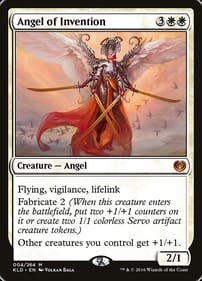
By Dan Brown I’m not a regular reader of the Batman titles, so it was news to me that in the current DC continuity, Alfred – the Dark Knight’s butler ally – is dead. And has been dead since Bane killed him in 2019. That’s why, in a recent issue over the summer, Alfred was replaced by his blond great-niece, Verity. Which got me thinking. Not about the finer points of butlering in Gotham City, but about death. Alfred being unalive for so many real years is an exceptionally long span for a comic character to spend in the afterlife. Death is a constant in comics. As is its inevitable reversal. “O death, where is thy sting?” was a question posed in the Bible, and in comic books death is usually treated like a wasp sting – momentarily painful, but hardly insurmountable. So while dying may be permanent for us mortals, it’s a passing phase to most comic heroes. Just look at the most consequential death in my time as a comic reader: In 1980, the creative team of John Byrne and Chris Claremont killed off the X-Men’s Phoenix/Jean Grey after the dark side of her nature took control. Realizing she was a threat of universal proportions, she zapped herself with a ray gun. Then, six years later, she was resurrected (due to internal Marvel politics, not in the pages of The Uncanny X-Men) and has been killed and reborn regularly since then. I guess that’s to be expected of a character named after a mythical bird whose superpower is to rise from the dead. But here’s the thing: When they brought Phoenix back the first time, I was so disillusioned. Her death held meaning for teen readers like me. We bought into it. She was toast. She was gone. Never to be seen again. Or so we thought. I remember a panel maybe two issues after her death in which one of her teammates, Nightcrawler, works through his grief for Phoenix. Having limited experience with death as a 13-year-old, it was a moving moment. So when Marvel brought Jean Grey back, it cheapened her sacrifice. I was so distraught, I gave up reading Marvel comics for a couple years. Since then, a long list of superheroes have temporarily died, like Superman in 1992, Captain America in 2007, and the Human Torch in 2011. The other problem is, when these characters inevitably do come back, it’s usually in a ham-fisted way. Granted, having a character expire is an interesting storytelling tool. There wouldn’t even be a Batman if Bruce Wayne’s parents hadn’t been shot dead. Thomas and Martha Wayne are on the short list of deceased comic characters who have stayed that way. Portraying the grief of the remaining survivors is also a fantastic opportunity for a writer looking for a meaty challenge, but I’ve yet to see a hero brought back from the grave in a “realistic” way – likely because coming back from death is not a real thing. There’s just no good way to explain why your favourite hero is no longer six feet under. Yet it must be nice to live in a world knowing that if someone you know dies, they can come back, and they likely WILL come back. I just wish the other heroes would acknowledge this. Why doesn’t Robin or Wonder Woman or one of Batman’s other friends turn to him and say, “I know you’re missing Alfred, buddy, but there’s no need to fret – I’m sure he’ll be back among the living one day soon.” Does anyone doubt it? If you have any thoughts about the topic, I'd love to read them in the comments! Dan Brown has covered pop culture for more than 34 years as a journalist and also moderates L.A. Mood’s monthly Graphic-Novel Group book club.
Ozzy Osbourne, Menace to Society?
By Dan Brown I did a double take when Ozzy Osbourne died last week. Watching the wall-to-wall media coverage, I had to make sure this was Ozzy Osbourne the news anchors were talking about, not someone else. Had there been a mistake? The deceased was lauded as a warm human being, a musical innovator, and a devoted father. Could they really be talking about Ozzy “the Prince of Darkness” Osbourne? The same guy authority figures had warned us kids about in the 1980s? The guy who threatened to force the collapse of society? Who polluted the morals of an entire generation? Whose songs were spawned in a fiery place many fathoms below the planet’s surface? That dude? What the? I watched on, and it turns out it was the same Ozzy! Only now it was like people were upset he was gone, no longer a menace to polite society and all that is holy. Which makes the Black Sabbath frontman just the latest example of Mark Twain’s dictum that “politicians, old buildings, and prostitutes become respectable with age.” Funny thing about the Blizzard of Ozz. Back in the day, he was as close as it came to a mortal emissary of Lucifer. Or so we were led to believe. The way our parents talked in hushed tones about him, and the way religious leaders, teachers, and others referred to him, you would have thought Ozzy was the right hand of the Archfiend. Why, it was rumoured in the schoolyard that a bat had fallen on stage during one of his solo-tour performances – and Ozzy had snatched it up, gobbling the winged creature’s head. I guess, because it was a bat, this act was taken as proof of the singer’s evil nature. Around the same time, he was arrested for defiling the Alamo while intoxicated. Folks, he urinated on the historic building. Then, all but proving he was put on Earth by the Father of Lies to corrupt young people, he was the target of a lawsuit alleging he drove a young fan to suicide with a “backwards-masked” message hidden in his solo song Suicide Solution. Why Ozzy would want to kill his own fans, thus decreasing his potential income base, was never fully explained by those who railed against him. They even burned his records. With a rap sheet like that, it’s no wonder the people in charge of educating and guiding my generation had warned us about Ozzy’s depravity. But then a strange thing happened. The lawsuit was laughed out of court (only in Ronald Reagan’s America would it have been allowed to move as far forward as it did). More fans listening to his music did not end their own lives. He had some kids with his manager, Sharon, then settled down. All was quiet until reality TV appeared on the scene years later. As you may recall, one of the sensational new shows featured Ozzy in the role of doddering father. Sure, he still swore like a heavy-metal musician, but gone was any trace of the pact he had struck with Beelzebub for eternal life. As contrived as the show was, he came across as . . . sweet. Warm. Human. The passing of the decades had worn away the dangerous and rough edges, as Twain knew they would. So by the time Osbourne died, no less an authority on goodness as Pat Boone posted on social media to express his grief. So did Donny Osmond. And the Alamo’s Instagram page carried a message about Ozzy’s humility, saying “redemption and reconciliation eventually became part of his history as well.” Like old politicians, old buildings and old sex workers, Ozzy is now respectable. But that could be how the forces of darkness work. By eroding our standards of behaviour over a lifetime. Or maybe, just maybe, all those things they said about Ozzy weren’t true, that he was just a regular bloke from Birmingham all along, trying to do his best with the inner resources he had in this crazy thing called life. Dan Brown has covered pop culture for more than 32 years as a journalist and also moderates L.A. Mood’s monthly graphic-novel group.