
Wither Star Wars?
By Dan Brown As you may have heard, Star Wars is at a crossroads. Lucasfilm, the company that produces the venerable franchise, recently got a new boss. Or rather bosses. Kathleen Kennedy is stepping down as president of the Disney subsidiary, and a two-headed monster is taking her place. Dave Filoni and Lynwen Brennan, two old hands at Lucasfilm, were announced last month as the venture’s new co-presidents – which sounds like a recipe for disaster to me. More on that in a moment. Depending on which social-media posts you read, Kennedy was either the very best or very worst thing that ever happened to the space-fantasy franchise. She was promoted to president in 2012, when Disney bought Lucasfilm and all its properties from namesake founder George Lucas. Since then, her record as leader has been . . . mixed at best. There have been high points, like the two seasons of Tony Gilroy’s Andor streaming series, as well as low points, like 2019’s The Rise of Skywalker, a movie even diehard fans admit is a chaotic mess. How bad is the sequel trilogy-concluding film? One line from Rise of Skywalker – “Somehow, Palpatine returned” – has since become shorthand for lazy moviemaking. Meanwhile, Andor has been lauded as a prescient fictional roadmap to the current political situation in the U.S. Kennedy wisely decided to let Gilroy have free reign to bring his vision to the small screen. She has greenlit other projects, including Rogue One, The Mandalorian, Obi-Wan Kenobi and Solo: A Star Wars Story (which I will defend to the death!). She has been blamed, unfairly in my eyes, for every misstep Lucasfilm has made along the way, and rarely gets any credit for keeping Star Wars alive in the public imagination. But I think we can all agree we’re happy she tried. Let’s face it, Star Wars has never been more ubiquitous. Lucas himself was not exactly a prolific filmmaker, seeming hesitant to exploit the storytelling possibilities of the universe he invented. In the seven years between 2005’s Revenge of the Sith and the Disney purchase, Lucas focused on the Clone Wars and didn’t put out enough other Star Wars product to satisfy fans. He had run out of gas. Now, about the management structure that’s taking Kennedy’s place. I don’t see how it can work. My firm belief is that committees can’t provide vision or leadership. And at this uncertain moment Lucasfilm needs more of both. Having two presidents, even if one is responsible for creative decisions and the other is in charge of operations, can lead only to heartache. My prediction is that, within a few short years, one of them will be forced out. It’s just not a sustainable model that can lead to success over a long period. I think what corporate history teaches us is that executives have an innate desire to build and protect their own empires. But at least it will give the fanboys something to complain about online! Dan Brown has covered pop culture for more than 32 years as a journalist and also moderates L.A. Mood’s monthly graphic-novel group.

Welcome to the Age of the Spiritual Sequel
Welcome to the age of the spiritual sequel By Dan Brown There’s been much discussion in recent days about the trailer for the new Steven Spielberg film Disclosure Day. Spielberg is being cagey about the new film’s relationship to his 1977 UFO classic Close Encounters of the Third Kind. Is Disclosure Day a sequel to Close Encounters? Is it a standalone film? The online debate rages on. Of course, there is one other possibility: It could be set in the same world, but not directly follow the events of Close Encounters. In other words, it could be a spiritual sequel. Which wouldn’t be surprising, since this is the age of the spiritual sequel. There appear to be more and more of them all the time. When the mockumentary series The Paper debuted last year, many reviewers pointed out how it was set in the same world as The Office. It even shared at least one character with its predecessor series. The Creed trilogy follows the six Rocky movies, but the central character is not Balboa himself, but the son of his frenemy Apollo Creed. The Texas college comedy Everybody Wants Some takes place in 1980, four years after Dazed and Confused, which is set in 1976 on the last day of high school. But EWS focuses on a different set of students; you don’t need to have seen the original to understand it. And the Exorcist, which stars Scarlett Johannson, is set for release a year from this March and is not a remake of or direct sequel to the 1973 horror classic, although it is set in the same imaginative universe. Spiritual sequels – which in television were always called spinoffs – make a lot of sense. Pretty much every sequel you can think of has already been made, so billing a movie as a spiritual successor gives studio marketing departments a way to promote a motion picture while also giving directors and producers creative room to manoeuvre. Are they better than direct sequels or prequels? There may be too little information at this point to make a definitive conclusion on that question. It’s probably much harder for filmmakers to capture the “flavour” of a popular motion picture while also creating a story that can stand on its own for those viewers who have no knowledge or memory of the first one. One suspects we are going to see even more of them – look at the Star Wars movies and shows all set in the same galaxy. Having a consistent milieu makes it easier for storytellers to find a launching point they can exploit, a logical entry point into a setting that already feels familiar to fans. Me, I have reason to believe Disclosure Day may be more of a direct sequel to Close Encounters than we’ve been led to believe. When a new trailer dropped during the Super Bowl, there were at least two images that look mighty familiar to me, including a spaceship shrouded in clouds and an isolated white house situated perfectly for an alien abduction. We’ll all find out for sure on June 12, when Spielberg's latest lands in theatres. Dan Brown has covered pop culture for more than 33 years as a journalist and also moderates L.A. Mood’s monthly graphic-novel group.

Still No Stunt Oscar
By Dan Brown It’s 2026. The world changes every day. And yet there’s still no Academy Award for stunt performers. In fact, the stunt-design category for the Oscars won’t be handed out until 2028, which marks one century of the bloated Hollywood awards show. By then, those who literally put their bodies on the line to create convincing movie action scenes will have waited a full 100 years to be recognized by the Academy. I was thinking about this when the Oscar nominations were announced last week. You may have heard or read something about this year’s nods. The biggest headline emerging out of the press conference was that a vampire flick, Ryan Coogler’s Sinners, got 16 nominations – making it the most-nominated film in the history of Hollywood. That’s more nods than Titanic ever got, or The Godfather or Ben-Hur. It sounds like an impressive achievement until you look a little more closely. Although fall guys and gals won’t get much-deserved recognition until two years from now, the Oscars did add one new category this time: The honour for best casting. So with one extra category, the odds of ANY film breaking the record for most Oscars went up a bit this year. Sure enough, one of the nods for Sinners is in the casting division. I’m not saying casting directors don’t work hard or don’t have an impact on a movie’s success. But the fact the stunt Oscar has been delayed for so many years tells you a lot about Tinseltown’s priorities. Compared to other awards shows, the Oscars are way behind the times. According to a report in the Guardian, the Actor Awards (formerly called the Screen Actors Guild Awards) already have a stunt-ensemble trophy for both film and television. And the Emmy Awards give prizes to both the outstanding stunt coordinator and outstanding stunt performer. As no less an authority than Jason Statham once said, it’s an injustice that “poncy actors” standing in front of a green screen get rewarded for their onscreen fakery while stunt performers remain anonymous. These folks jump from buildings, get set on fire, make fights look authentic, yet they toil in obscurity. It’s almost like the Hollywood elite don’t want them to become household names, alongside the actors they represent on the silver screen. Stunt workers are cinema’s second-class citizens despite the crucial role they play. You might even think actors and actresses don’t want to share the glory by the way they continue to perpetuate the fiction that A-list stars do their own stunts. If you’ve seen a motion picture lately, more than likely it has scenes that called for stunt work – even in this age of computer-generated imagery. Yet when was the last time you heard a big-name star boast in an interview, “Do my own stunts? Are you kidding? No way am I putting my butt on the line!!!” Besides, it’s not like the insurance company would let them. Dan Brown has covered pop culture for more than 33 years as a journalist and also moderates L.A. Mood’s monthly graphic-novel group.

Why Not AI Actors?
By Dan Brown One AI-generated actress tries to get an agent, and all of sudden Hollywood loses its mind. That’s what happened over the last couple weeks when the company behind Tilly Norwood, the AI performer, shopped its creation around Tinseltown to talent agencies in hopes of attracting representation – as reported in outlets like the Hollywood Reporter. Tilly buys iced coffee on the street. Tilly has money problems. And even though Tilly has an Instagram account like other celebrities, she’s not a real person. It’s a character, a program that could even be a useful tool in the hands of the right filmmaker. (Tilly also waves a lot, I think to show that her hands don't have any extra digits.) Among those speaking out against Norwood was SAG-AFTRA, the union that represents the human actors who appear in movies and on television in the U.S. “It has no life experience to draw from, no emotion and, from what we’ve seen, audiences aren’t interested in watching computer-generated content untethered from the human experience,” the union huffed in a statement, “It doesn’t solve any ‘problem’ — it creates the problem of using stolen performances to put actors out of work, jeopardizing performer livelihoods and devaluing human artistry.” Does this union know anything about movie history? At its most basic, Tilly Norwood is just the latest special effect in an industry whose trade is making unbelievable things look real. And computer-generated characters have been on our screens since at least the early 1990s, when George Lucas used them as background actors in The Young Indiana Jones Chronicles, paving the way for his Star Wars prequel trilogy. It’s funny, because when Lucas debuted the character Jar-Jar Binks in 1999’s The Phantom Menace, I remember a lot of griping about the Gungan by critics, but no one complained the alien was putting anybody out of work due to his being a CGI creation. Animation itself goes back several decades deeper into the past. Has SAG-AFTRA ever objected that Foghorn Leghorn was a danger to its members? As for the charge that Norwood was trained on the performances of human actors without compensation, that holds water. It’s also what flesh-and-blood performers have been doing since acting was invented. Did Christian Slater ever pay Jack Nicholson for being the basis of his character in the 1988 film Heathers? No, because there’s a time-honoured tradition that younger actors study classic performances – by Nicholson, Marlon Brando, Meryl Streep, Al Pacino, take your pick – and then swipe the mannerisms of their elders, incorporating them into their own work. No doubt the union heads are working on a way to outlaw that “theft,” too. Also, I hate to break it to SAG, but agreeing to represent an AI isn’t the sleaziest thing a Hollywood agent has ever done to make a buck. Me, I’m old school. I happen to believe no AI or CGI or any other character brought to life by means of technological trickery will ever be able to approximate what the best actors can do on the movie or TV screen, or on stage for that matter. From what I’ve seen so far, they won’t even be able to come close. But if audiences decide they want to watch Tilly Norwood over the real thing, who am I to say they’re wrong? Here’s a novel idea: Let’s let the market decide. Dan Brown has covered pop culture for more than 33 years as a journalist and also moderates L.A. Mood’s monthly graphic-novel group.
Jaws is a Classic Because Spielberg was Powerless
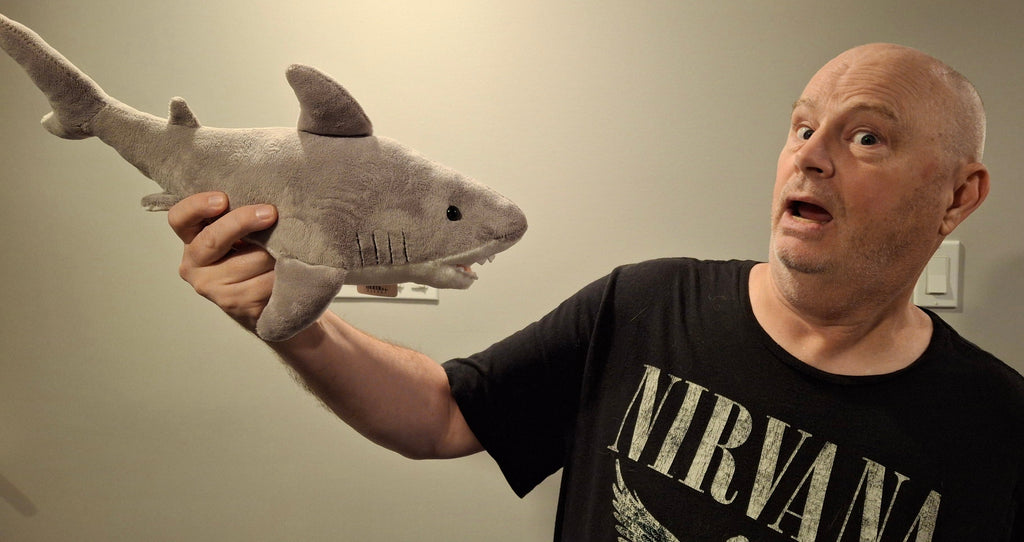
By Dan Brown As you may have already heard, this summer marks 50 years since the release of Steven Spielberg’s Jaws, the motion picture that ushered in the age of the blockbuster. It was in 1975 that the great white shark of the title started his long career of gnawing on skinny dippers, water skiers, power cables and even a helicopter. Luckily for us movie fans, the original Jaws was made by Spielberg back when he had no power in Hollywood. The limits placed on him by the constraints of the studio system boxed him in, and indirectly made the movie a commercial and critical success. Moviegoers couldn’t get enough of Jaws that summer. It would eventually spawn three sequels. This lack of freedom forced the then-young filmmaker to make some daring creative choices. Sure, during the troubled shoot on Martha’s Vineyard he had a fancy mechanical shark to play the part of the monster. But the primitive robot proved unreliable. What Spielberg did in response flew in the face of moviemaking logic. Instead of using the rubbery-looking faux fish in the attack scenes, he took a page from Alfred Hitchcock’s bag of tricks and shot around the shark, intending to rely on the power of suggestion. Those who had seen the shower scene in Hitchcock’s 1960 thriller Psycho swore that they had been witness to a knifing in which flesh was violently ripped open; the truth was that no such shots existed – based on the rapid shower montage, the brains of viewers supplied the missing visual information, and they thought they saw a blade tearing through skin. Spielberg followed suit, aiming to achieve the same effect. What you have to bear in mind is that, back in the 1970s, the standard practice in Hollywood was to give ticket buyers a good look at the monster, putting the full special-effects budget on the screen in front of them. That’s the way things were done. What Spielberg didn’t have was a realistic shark (which becomes apparent in the film’s third act aboard Quint’s boat) but the special effect he did have was the minimalist score written by John Williams. Two notes. That’s all Spielberg had going for him. Added to the suggestive footage in which the shark didn’t appear, it worked. Spielberg’s audacious decision to hide the undersea attacker was a masterstroke. The suspense of not seeing the shark but being overpowered by the Williams score led to a lot of real anxiety – people in 1975 really were afraid to go in the water, even if it was a body where sharks don’t reside, like the backyard swimming pool. Viewers saw it again and again. It’s true Universal Pictures upped Spielberg’s budget as the hell shoot dragged on, and the gamble paid off handsomely for the company. But his hands were tied in so many other ways, a consequence of working within Old Hollywood. Studios didn’t like to take chances. And there was a real sense of shame if a filmmaker made an ostentatious flop, which Spielberg experienced when his disastrous 1941 was released four years later. (Late-career George Lucas is a telling counterpoint to early-career Spielberg. Lucas earned all the power he wanted to make films his own way, cutting the studios out of the power dynamic, and the result was . . . Jar-Jar Binks. Lucas made his best movies within the studio system.) The wheels falls off Jaws in the last half-hour or so, when the shark wriggles up onto the deck of the Orca. It was a laughable moment, and it’s a testament to the power of the film up to that point that the audience didn't hold it against Spielberg. Quint’s powerful monologue was clearly still echoing in their minds when Bruce is revealed. Some critics argue Jaws also tapped into the post-Watergate disenchantment of the times. The Amity mayor who ignores Brody’s entreaties in the first film to close the town’s beach is still mayor in Jaws 2, launching a million jokes about the importance of voting in municipal elections. All of which brings up the obvious question: Are there any movies from the summer of 2025 that will be celebrated a half-century from now, as Jaws was feted this summer? It feels like that’s a long shot. Instead of grassroots word-of-mouth, which propelled Jaws, the practice now seems to be for a studio to give even a half-baked release a $100 million marketing budget with the goal of winning the opening weekend before word gets around on social media, killing a mediocre picture’s earning potential. Dan Brown has covered pop culture for more than 32 years as a journalist and also moderates L.A. Mood’s monthly graphic-novel group.
Are We Over Origin Stories?
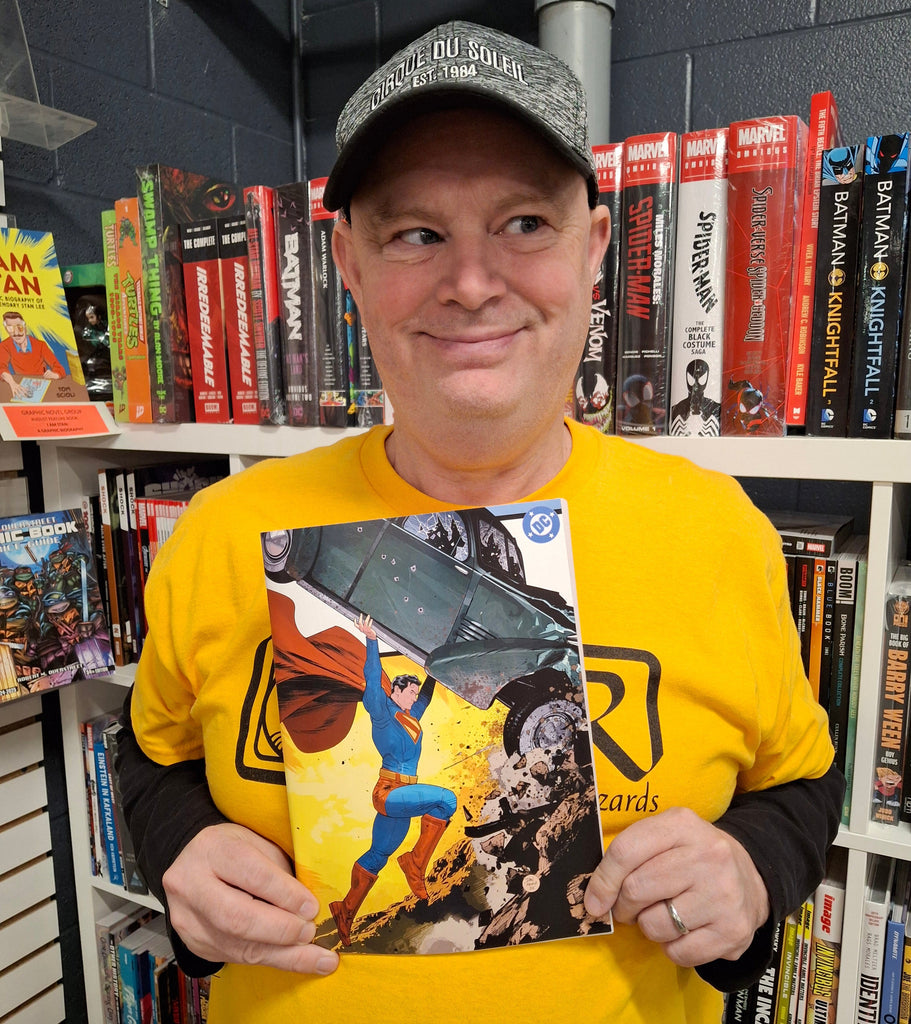
By Dan Brown SPOILER WARNING! This column contains plot points from the movies Fantastic Four: First Steps and Superman, both currently in theatres, so if you haven’t seen them yet and you value surprise, stop reading here. Is this a trend in the making? If you’ve seen this summer’s big superhero movies – I’m thinking of The Fantastic Four: First Steps and Superman specifically – you may have noticed something essential was missing from both motion pictures. The secret origin. Traditionally a staple of superhero movies, and the comics that spawned them, most DC and Marvel comic series have a common starting point. They explain up front, to satisfy the audience’s craving for continuity, how the hero came to possess their unusual abilities. How they go from mere mortal to crime-fighting powerhouse. So up until now, the launching-off point for these stories was the origin. In the 1978 Superman film, for example, a significant portion of the first hour is given over to showing life on Krypton before it exploded, including details about Kryptonian politics that wouldn’t pay off until Superman II. We see the future Clark Kent as he is dispatched from the doomed planet, years before he would don his red-and-blue costume to do battle with the likes of Lex Luthor. It’s the same with other superhero movies, such as 2002’s Spider-Man. That film, and the reboots that followed, gave viewers a good look at the events that birthed the title character. This summer’s Superman, however, does not start the same way. Krypton is never depicted, in fact, the movie jumps ahead to the point on the Superman timeline when Clark is dating Lois, and she already knows his secret identity. The same goes for First Steps. The story kicks off four years after Reed Richards and his crew of astronauts were bathed in cosmic rays, giving them weird powers. The movie begins not with their origin, but with Sue Richards finding out she’s pregnant with the couple’s son, so it’s Franklin’s origin that’s stressed. Neither film dwells on the secret-origin part, which is a startling development when you take into account how many filmmakers have felt obliged to put, say, Batman’s secret moment of inception on the silver screen. Sometimes it feels like Bruce Wayne’s parents will never get out of that alley, and Peter Parker has been bitten by an infinite number of radioactive spiders. In comics, there’s been much experimentation with this storytelling staple. Consider that in Action Comics No. 1, the Man of Steel’s origin was related in one page. Then compare that to the 1987 Batman: Year One storyline, which explained the Dark Knight’s beginnings over four issues. The makers of Captain Canuck waited until issue No. 5 to reveal to fans how Tom Evans had been zapped by an alien ray, doubling his strength. At their root, secret origins satisfy the reader’s need for continuity by explaining what happened before the first issue and answering the question, “Why does Batman hate criminals so much that he wages an unending war on them?” to name one example. Marvel impresario Stan Lee, perhaps weary after having to come up with so many origin stories in the 1960s, invented a whole class of characters – mutants – who had no origin story. X-Men like Cyclops, Marvel Girl, and Iceman were all born that way. The telling part is while some movie reviewers noticed what was missing from First Steps and Superman, none have complained that the omission made either of these films worse. Judging by online comments, ordinary fans don’t seem to mind, either. Have we reached some kind of watershed moment in the history of the superhero genre? Has fandom gotten over origin stories? The critical consensus seems to be that, after a period of lacklustre DC and Marvel films, this summer’s superhero offerings have reversed the downward trend in quality. Are moviegoers in 2025 more sophisticated than previous audiences? Are we witnessing the birth of something new? If you have any theories, I'd love to hear them in the comment box below! Dan Brown has covered pop culture for more than 32 years as a journalist and also moderates L.A. Mood’s monthly graphic-novel group.